Close
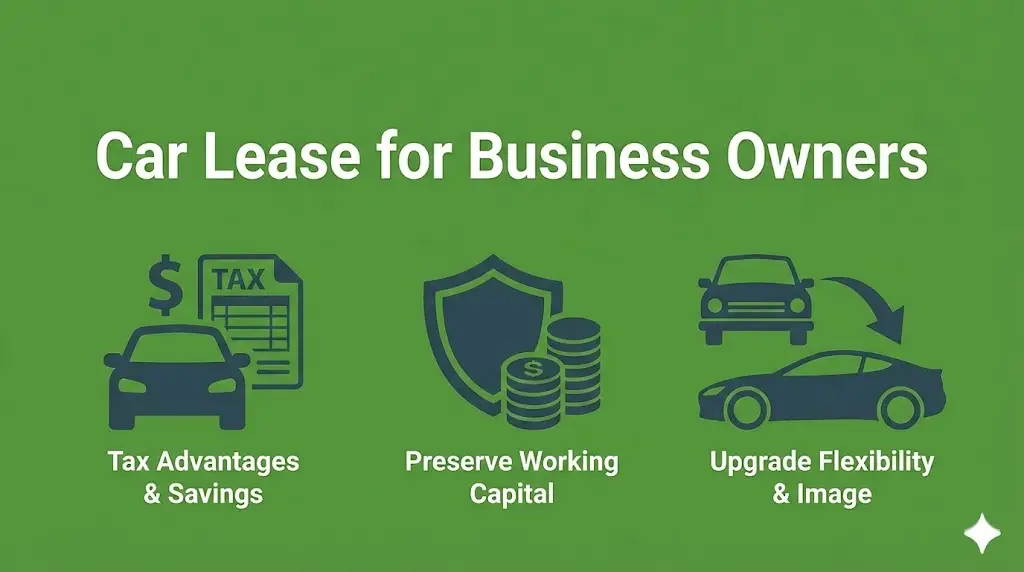
Let’s be honest. Walking into a dealership is rarely the highlight of a business owner’s week. You are already juggling payroll, client demands, and supply chain headaches. The last thing you need is a finance manager speaking in riddles about “money factors” and “capitalized cost reductions” while you just want a straight answer: Is this a good deal for my business or not?
In 2026, the game has fundamentally changed. We are seeing a massive shift in how companies acquire assets. With interest rates for new car loans hovering around 7% and vehicle prices remaining stubbornly high, the decision to lease isn’t just about “wanting a new car” it is a critical financial strategy. It is about preserving your working capital, maximizing tax deductions, and keeping your cash accessible for growth rather than parked in a depreciating piece of metal in your driveway.
Whether you need a fleet of electric vans for your logistics company in Brooklyn, a heavy-duty pickup for construction in Texas, or a client-impressing sedan in Florida, this guide covers everything you need to know about a car lease for business owners in 2026.
Speak to a Lending Valley Expert, Get a custom strategy for your fleet, whether it’s one car or ten, and ensure you are structuring your lease for maximum tax efficiency.
The old school rule of thumb was simple: “Buy it if you plan to keep it for more than five years.” In 2026, that logic is fading fast. Technology in vehicles especially with the rapid evolution of EVs and hybrids moves so quickly that buying a vehicle often means owning obsolete tech in 36 months.
Expert Insight: “In 2026, we are seeing business owners shift from ‘pride of ownership’ to ‘utility of usership.’ Why tie up $80,000 in a depreciating asset? A smart car lease for business owners allows you to expense the monthly usage and invest that $80,000 into marketing or inventory that actually grows your business.” — Sarah Jenkins, Senior Fleet Analyst, NYC.
This decision isn’t one-size-fits-all. It depends on your cash flow, your tax strategy, and how hard you ride your vehicles. Here is the definitive breakdown for the current market.
| Feature | Business Lease (Operating Lease) | Buying / Equipment Finance (Capital Lease) |
| Cash Upfront | Low: Usually just the first month + modest fees. | High: Typically 10-20% down is required. |
| Monthly Payment | Lower: You only pay for the depreciation during the term. | Higher: You are paying for the full principal + interest. |
| Tax Treatment | Simple: Deduct monthly payments as an operating expense (based on business use %). | Front-Loaded: Deduct depreciation (Section 179/Bonus) + Interest. |
| Ownership | None: You return the vehicle at the end (or buy it out). | Full Asset: It sits on your balance sheet as an asset. |
| Mileage Limits | Strict: Usually capped at 10k–15k miles/year. Penalties are steep. | Unlimited: Drive as much as you want. |
| Best For | Luxury cars, client-facing roles, tech-heavy EVs. | Work trucks, high-mileage routes, “drive it til it dies” assets. |
Export to Sheets
If you own a vehicle outright and need to inject cash back into your business quickly, you might consider structuring Loans with Your Car as Collateral to unlock equity without selling your essential assets.
To understand how a car lease for business owners works in the wild, let’s look at three specific scenarios from this year.
The Business: “GreenRoute Delivery,” a last-mile courier service based in Red Hook, Brooklyn. The Challenge: The owner, Marcus, needed to expand his fleet with 5 new electric cargo vans to meet client demand for “green delivery.” Buying them outright would cost over $300,000, which would completely drain his operating reserves. The Strategy: Marcus looked for Business Loan in Brooklyn options but found that traditional banks wanted 20% down ($60k) and took weeks to approve. The Solution: He opted for an open-ended TRAC lease (Terminal Rental Adjustment Clause). The Outcome:
The Business: “Sunshine Estates,” a luxury residential brokerage in Miami, Florida. The Challenge: Elena, the founder, wanted a $120,000 luxury SUV. In her industry, image is everything—picking up clients in an old sedan wasn’t an option. However, she was worried about the debt-to-income ratio on her personal credit report. The Strategy: She considered a Business loan in Florida to buy it, but realized that luxury cars depreciate like rocks. She didn’t want to be stuck with a car worth $60k in three years while owing $80k. The Solution: She signed a 24-month business lease in the company’s name. The Outcome:
The Business: A solo IT network consultant who travels to client sites across the Tri-State area. The Challenge: David needed a reliable vehicle but had a “thin file” for business credit. He had only been incorporated for 14 months. The Strategy: He applied for Business funding in Newyork through traditional channels but was rejected due to “insufficient time in business.” The Solution: He worked with an alternative financing partner (like Lending Valley) that looked at his monthly invoices rather than just his credit score. They structured an Equipment Finance Agreement (EFA). The Outcome:
Before you sign, you need to know where the landmines are.
Myth: “I can lease a car and also take the 72.5 cent mileage deduction.” Fact: generally, you cannot double dip. If you lease, you usually deduct the actual expenses (lease payment + gas + insurance + repairs). You can choose the standard mileage rate for a leased car, but if you do, you cannot deduct the lease payment. You have to do the math:
Finding the right partner for a car lease for business owners is as important as finding the right car.
| Provider Type | Examples | Speed to Fund | Approval Difficulty | Best For |
| Captive Lenders | Ford Credit, BMW Financial | Medium (2-5 days) | High | Perfect credit, Brand loyalists who want promotional rates. |
| Traditional Banks | Chase, BoA | Slow (2-4 weeks) | Very High | Established corporations (2+ years in business) with audited financials. |
| Alternative Lenders | Lending Valley | Fast (24-48 hrs) | Low/Medium | Startups, “Bad” credit, High cash flow businesses, Speed. |
While leasing offers lower monthly payments, some business owners prefer to own the asset outright. If you decide to buy, exploring competitive Credit Car Loans can help you secure a lower interest rate, ensuring your long-term costs don’t eat into your potential profits.
Most people think of Lending Valley for working capital, but they are a secret weapon for vehicle acquisition.
The Problem: Traditional dealerships are great at selling cars to people, but they are often terrible at selling to businesses. They might decline you because your business is too young, or they might force you to sign a personal guarantee that ruins your debt-to-income ratio.
The Lending Valley Solution:
Dealers often make the process harder than it needs to be, confusing personal guarantees with corporate liability. Lending Valley simplifies the paperwork, making it easier than ever to Lease a Car Through Your Business in the USA regardless of whether you are an established corporation or a growing LLC.
A: Yes, but it is harder. Traditional dealer leases usually require 2 years in business. However, using Business funding in Newyork through alternative lenders like Lending Valley can help you bypass these strict tenure requirements by using your current cash flow as proof of ability to pay.
A: It is complicated. The “Commercial Clean Vehicle Credit” (Section 45W) had a legislative cutoff for vehicles acquired after September 30, 2025. Unless you had a binding contract before that date, you likely cannot claim the federal commercial credit for a new acquisition in 2026. Always check with a CPA for the latest state-specific incentives, as states like New York or California may have their own programs.
A: The IRS standard mileage rate for business use in 2026 is 72.5 cents per mile, up 2.5 cents from the previous year. This increase helps offset rising fuel and maintenance costs.
A: Potentially, yes. In 2026, the IRS issued guidance allowing 100% bonus depreciation for eligible property acquired after Jan 19, 2025. This means if you buy a qualifying work truck or heavy SUV (over 6,000 lbs), you might be able to write off the entire cost in year one.
A: It shouldn’t, provided you set it up correctly. If you sign a “Personal Guarantee,” it might show up if you default. However, true commercial lenders typically report to business bureaus like Dun & Bradstreet or Experian Business, keeping your personal report clean.
A: Yes. Many business owners take out a working capital loan to pay the “due at signing” fees or to prepay a 12-month lease term upfront to negotiate a better discount.
A: You pay a penalty, often 15 to 25 cents per mile. If you know you will drive a lot, look into a TRAC lease or an Equipment Finance Agreement (EFA), which typically do not have mileage caps.
Leasing a car for your business in 2026 is one of the smartest ways to upgrade your image and operations without draining your bank account. The landscape is shifting tax credits are expiring, but bonus depreciation is back. Navigating these changes requires a strategy, not just a signature.
Whether you are seeking Business funding in Newyork to expand a delivery fleet, or a Business loan in Florida to get that client-impressing sedan, the options are more flexible than ever. Don’t let the paperwork scare you. The tax benefits and cash flow protection are worth it.
Ready to get moving?
Get Your Equipment Financing Quote, See how much vehicle power your business qualifies for today without hitting your personal credit.
Disclaimer: We are not tax attorneys. Tax laws, including Section 179 and Bonus Depreciation, are subject to change. Always consult with your CPA before making major financial decisions.