Let’s rip the band-aid off: In 2025, a “decent” business credit score is no longer a golden ticket, it’s just the price of admission.
With SBA loan sizes shrinking (down to an average of $435,827 this year) and approval criteria tightening, lenders are being pickier than ever. The old advice of “just pay your bills” is still true, but it’s not enough to compete with the AI-driven underwriting models that now dominate the market.
If you want to survive the 35% denial rate that plagued small businesses earlier this year, you need a strategy. Here are 10 proven ways to boost your business credit score right now, backed by the latest 2025 data and real-world success stories.
1. Separate Church and State (Your Finances)
It sounds basic, but in 2025, commingling funds is the #1 reason for “auto-rejection” by fintech lenders. AI algorithms now scan your bank feeds instantly; if they see Netflix subscriptions mixed with inventory purchases, your “reliability score” tanks.
Action: Incorporate (LLC or Corp) and get an EIN immediately.
2025 Insight: Lenders like Bluevine and Kabbage (now Amex) place heavy weight on “clean” data feeds. A messy bank statement is as bad as a late payment.
2. Embrace the “Bi-Merge” Reality
The mortgage world shifted to “bi-merge” credit reports (using two bureaus instead of three) to encourage competition, and business lending is following suit.
The Change: You can no longer rely on one good score from Experian to hide a bad one from Equifax. Lenders are increasingly pulling a composite view.
Action: Check all three major bureaus (Dun & Bradstreet, Experian, Equifax) monthly.
3. Get on the “Vendor Power” List (Net-30)
You need tradelines, credit accounts that report to bureaus. The easiest way to get them is through vendors like Uline, Grainger, or Summa Office Supplies.
How it works: Buy $50 worth of supplies on “Net-30” terms (pay in 30 days). Pay it back in 10 days.
Why it works: These vendors report your positive payment history to D&B, creating a “PAYDEX” score foundation without you needing a bank loan.
4. The “15-Day” Rule (Beat the AI)
“On time” is late in the eyes of 2025 scoring models.
The Strategy: Pay your invoices 15 days early.
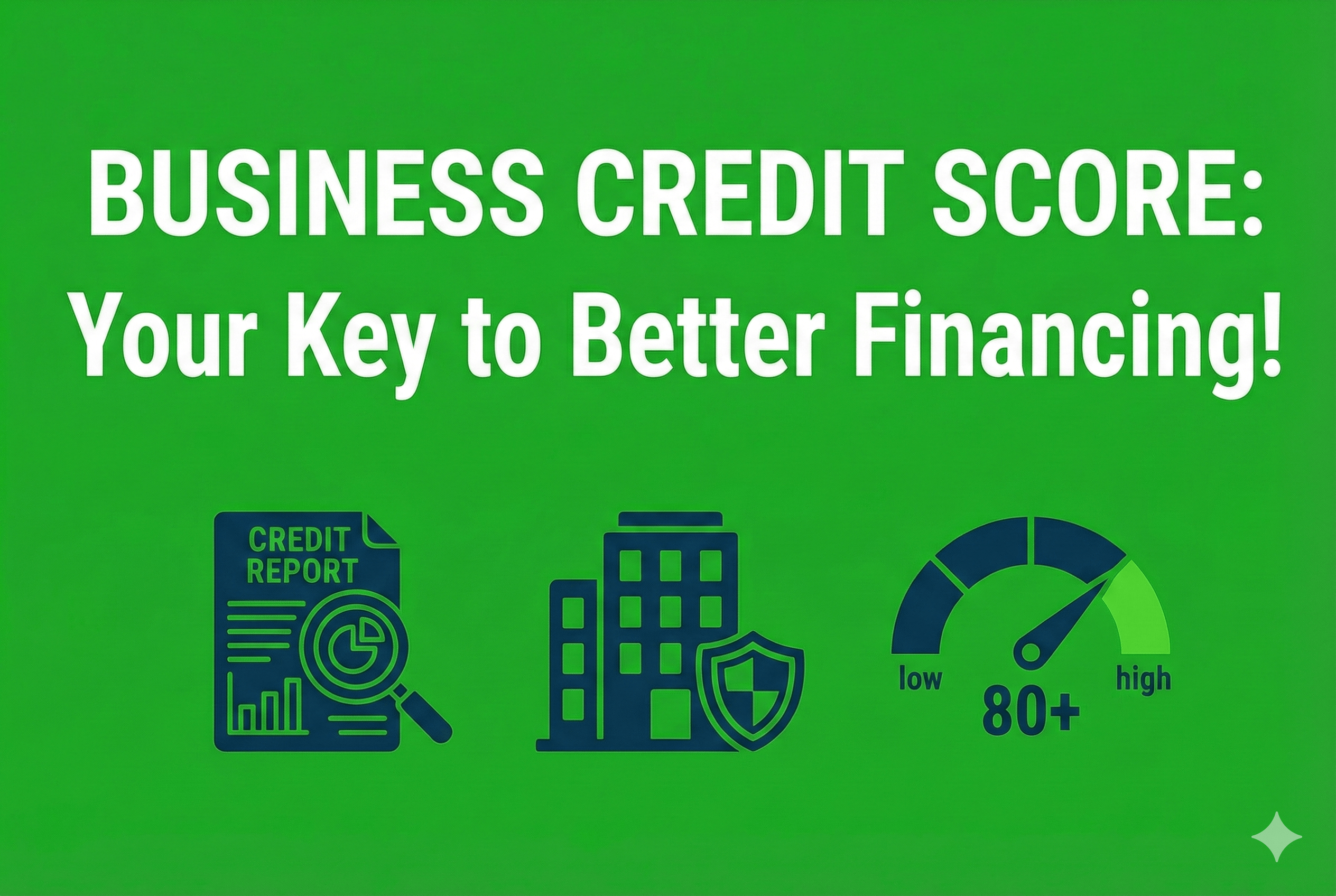
The Stat: Businesses with a D&B PAYDEX score of 80+ (which requires paying early, not just on time) saw a 20% higher approval rate for lines of credit in Q1 2025.
5. Fix Your Personal Credit (The “Blended” Score)
Unless you are a massive corporation, your personal credit still matters. The FICO SBSS score—used heavily by the SBA blends your personal and business data.
Real World Case Study: The Comeback: Sergio C., an energy company owner, was denied by 10 different banks in early 2025. After using a credit monitoring tool to identify personal credit errors and business reporting gaps, he fixed the “blended” data points. The result? He finally secured the funding to win. (Source: Nav Customer Stories, 2025).
6. Dispute Errors Like a Lawyer
A 2025 study found that 25% of business credit reports contain errors. That could be a wrong address, an incorrect industry code (SIC/NAICS), or a debt that isn’t yours.
Action: Use the dispute portals on D&B and Experian.
Pro Tip: Check your NAICS code. If you are listed as “Real Estate Investment” but you are actually “Property Management,” you might be auto-flagged as “High Risk.”
7. Utilize “Credit Builder” Cards
Secured business cards are having a moment in 2025 as lenders shift toward collateralized risk.
The Tool: Cards like the Bank of America® Business Advantage Secured or fintech options like Divvy (now BILL Spend & Expense) allow you to put down a deposit that becomes your credit limit.
Why: They report to bureaus as a standard line of credit, masking the fact that it’s secured.
vaeenma/Indiapicture
Explore
8. Keep Utilization Under 30% (But Use It!)
Having credit and not using it generates a “Ghost Score” (no data). having credit and maxing it out generates a “Risk Score.”
The Sweet Spot: Keep your credit utilization ratio between 1% and 30%.
2025 Trend: Lenders are looking for “purpose-driven borrowing.” A study by Home Credit India in 2025 showed a massive shift where 25% of borrowers sought credit specifically for expansion rather than survival. Lenders want to see you using credit for growth, not just floating bills.
9. Avoid the “Stacking” Death Spiral
In 2025, regulatory crackdowns exposed predatory “stacking” taking multiple high-interest cash advances at once.
The Risk: If a lender sees inquiries from three different Merchant Cash Advance (MCA) companies in one week, you are flagged as “distressed.”
The Rule: Apply to one reputable lender at a time. Wait for a decision before moving to the next.
10. Leverage “Trended Data”
New scoring models like VantageScore 4.0 (now being adopted widely) look at “trended data.” They don’t just see your balance today; they see if your balance has been decreasing or increasing over the last 24 months.
Action: Show a downward trend in debt balances over 6 months before applying for a major loan.
Let’s be real: fixing your payment history takes months. If you don’t have the luxury of time, check out our guide on no credit check business loans to see how revenue can trump credit score.
📊 Real Success Stories from 2025
To prove this isn’t just theory, look at who is winning this year:
1. The “SBA Star”: Beth Anne Benike (Busy Baby)
The Win: Named the 2025 Minnesota Small Business Person of the Year.
The Strategy: Beth didn’t just rely on sales; she leveraged SBA Express loans and the SBA THRIVE program. By maintaining a pristine credit profile (vital for SBA guarantees), she expanded her veteran-owned business into a 7,000-sq-ft facility despite global supply chain tariffs.
The Lesson: Government-backed loans require the highest credit standards—prepare for them before you need them.
2. The “Monitoring” Master: Jonathan C. (420XAA)
The Situation: Faced with a high-risk industry label.
The Fix: He used continuous credit monitoring (via Nav) to see exactly what lenders saw. By understanding his “risk grade,” he could target lenders who were friendly to his specific sector.
The Lesson: You can’t fix what you can’t see.
3. The “Secured” Shift
The Stat: In Q2 2025, secured business loans grew significantly faster than unsecured ones.
The Takeaway: Businesses that were willing to “skin in the game” (collateral or secured cards) found funding when unsecured applicants were denied.
🚀 Your Next Move
Improving your business credit score is a marathon, not a sprint, but you can start jogging today.
Action Item: Go to Nav.com or Dun & Bradstreet right now and check your score for free. If you don’t have a D-U-N-S number yet, apply for one. It’s the social security number for your business, and without it, you’re invisible.
Need help decoding your credit report? Drop a comment below or share your biggest funding challenge!
CEO at Lending Valley, a pioneer in the Fintech and alternative lending space. He has assisted thousands of business owners to receive funding over the last 10 years and is focused on helping one small business at a time achieve access to capital.