Our goal at Lending Valley is to provide all small business owners access to the best loans possible for their business. You can rest assured we will get you the best rates in the market!

You just received the approval email you have been waiting for. The alternative lender says the funds can hit your business checking account by 5:00 PM today. It feels like a massive relief. But then you look closely at the attached term sheet. You do not see a standard Annual Percentage Rate (APR). Instead, you see a confusing term called a “factor rate” listed at 1.35.
What does that actually mean for your daily operational cash flow?
Here is the brutal truth about the 2026 commercial financial market. The speed of business is moving faster than ever before. When a crucial piece of manufacturing equipment breaks down, or you need to make a massive, fast inventory purchase to fulfill a sudden order, you cannot afford to wait six weeks for a traditional local bank to underwrite your file. Alternative online lenders know this perfectly well. They use these “factor rates” to intentionally make highly expensive capital look incredibly cheap to the untrained eye.
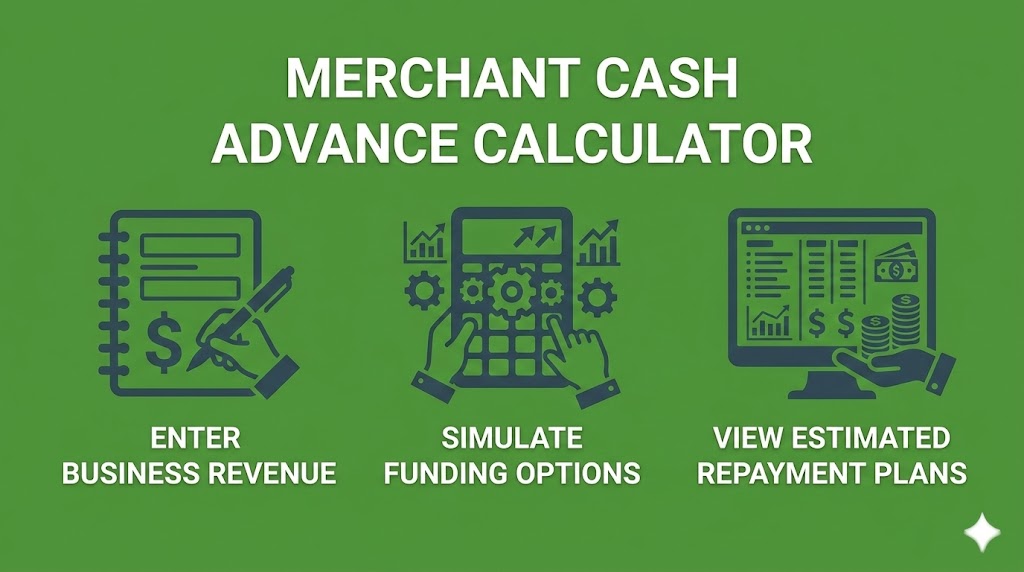
If you do not run those proposed numbers through a proper merchant cash advance calculator, you might accidentally sign up for a short-term advance with an effective APR exceeding 120%. If you are staring at a confusing term sheet and wondering what the actual cost of your capital is, taking a few minutes to understand exactly How to Calculate Fees, APR, and Factor Rates is your absolute best defense against predatory lenders.
You absolutely need capital to grow and survive, but you also need to fiercely protect your hard-earned profit margins. This comprehensive, detailed guide will show you exactly how to translate confusing factor rates into real dollars, how to avoid the notorious daily payment trap, and how to successfully secure the best possible terms for your enterprise right now.
The alternative commercial lending space has expanded massively over the last few years. According to updated 2026 financial sector data, 62% of small businesses actively sought alternative, non-bank working capital in the past twelve months. Unfortunately, the default rate on poorly structured, short-term cash advances has also crept up to an alarming 24% nationwide.
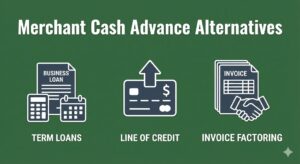
If you plug that factor rate into a calculator and realize the annualized interest is going to crush your profit margins, don’t panic you simply need to pivot and explore much safer Merchant Cash Advance Alternatives that actually respect your cash flow.
Why are so many otherwise healthy businesses defaulting? Because the owners simply did not do the complex math before signing the contract.
“A factor rate is essentially just a massive Annual Percentage Rate wearing a very good disguise,” explains Marcus Vance, a senior commercial credit analyst based in Chicago. “Because an MCA is legally classified as a B2B purchase of your future receivables and not a traditional loan, these funders do not have to follow standard federal APR disclosure laws. They rely heavily on the business owner being in too much of a hurry to calculate the true, annualized cost of the money.”
This lack of transparency is exactly why utilizing a reliable merchant cash advance calculator is your absolute best line of defense against predatory lending practices.
Book a Free Strategy Call with a Lending Valley Advisor, Let our financial experts look closely at your cash flow and map out a comprehensive capital strategy that actually helps you grow sustainably.
Let’s break down this complex financial jargon into plain, actionable English so you can protect your cash flow.
When you secure a traditional term loan from a bank, you are given an APR. With an amortizing APR, the faster you pay off the principal loan balance, the less total interest you pay over the life of the loan. Your early payments save you real money.
When you take an MCA, you are assigned a Factor Rate. This is usually a decimal figure between 1.10 and 1.50. This specific rate is multiplied by your total borrowing amount to determine your absolute total payback. It is a strictly fixed cost. It mathematically does not matter if you pay the advance back in six months or if you hustle to pay it off in six weeks; the total dollar amount you owe to the funder stays exactly the same.
Here is a step-by-step example of how the math actually works behind the scenes:
When you ignore the reality of a 22-day-a-month ACH draft, you will quickly learn exactly How MCAs Can Hurt Your Cash Flow and threaten your ability to cover basic operational expenses like payroll.
Do not let a slick, high-pressure sales rep rush you on the phone. Before you digitally sign any legal document, run the numbers through your merchant cash advance calculator using our detailed T.R.U.E. framework.
Calculate Your True Cost of Capital Now, Use our free, proprietary tools to break down your current funding offers and finally stop overpaying for speed.
Even brilliant, highly educated business owners make emotional mathematical mistakes when their back is against the wall. Avoid these three devastating mathematical traps at all costs:
1. Thinking “Early Payoff” Actually Saves You Money With a traditional, amortizing business loan, paying early directly saves you interest. With a standard MCA, the total payback amount is legally baked into the contract on day one. If you owe $65,000 and you somehow pay it off on day two, you still pay the full $65,000. You must always check the contract for an explicit, written early payment discount clause before assuming you can save money by paying fast.
2. Ignoring the Daily Cash Flow Drain Your initial math might show a daily ACH payment of “only” $400. That sounds incredibly manageable until you sit down and realize it drafts 22 business days a month. That is $8,800 quietly leaving your operating account every single month, regardless of your actual sales volume or seasonal dips. This rigid structure frequently causes businesses to bounce essential payroll checks.
3. Falling for the “Stacking” Trap Taking a second, higher-interest advance just to cover the suffocating daily payments of your first advance is absolute financial suicide. Never stack factor rates on top of each other. If you cannot afford the first payment, adding a second one will guarantee a default.
If you do not run those proposed numbers through a proper merchant cash advance calculator, you might accidentally sign up for a short-term advance with an effective APR exceeding 120%. Understanding the math upfront is the first step in learning How to Escape the Trap of predatory daily payments.
Here is exactly how three real business owners utilized basic math to escape terrible deals and secure healthy capital this year.
A successful restaurant owner in Miami desperately needed $60,000 to completely renovate his outdoor patio before the busy spring tourist season arrived. His local, traditional bank denied his request for a standard Business loan in Florida because of a slight dip in revenue the previous winter. An aggressive online broker immediately offered him $60,000 at a 1.45 factor rate, payable in just 6 months.
He smartly plugged the terms into a merchant cash advance calculator and realized he would be paying back a staggering $87,000 with an effective APR well over 100%. He declined the toxic offer. Instead, he utilized Lending Valley to successfully secure a revenue-based Business loan in Florida with a 12-month term and zero daily ACH payments. Doing the math saved him over $14,000 in unnecessary fees. A few months later, with revenues soaring, he easily qualified for a third, much larger Business loan in Florida to officially open a second location.
A mid-sized trucking dispatcher had $150,000 heavily tied up in unpaid, aging invoices from large corporate clients. They desperately needed immediate Business funding in Texas to cover their independent drivers’ weekly payroll. They received a flashy MCA term sheet featuring a 1.35 factor rate.
After running the complex numbers, they quickly realized the daily ACH drafts would completely wipe out their thin operating margins. Instead of taking the dangerous MCA, they smartly opted for invoice factoring to satisfy their need for Business funding in Texas. They secured the capital within 24 hours, paying a flat 3% factoring fee rather than a 35% markup. Today, this reliable factoring line remains their primary, safest source of Business funding in Texas, allowing them to scale their fleet safely.
An online boutique retailer based in Brooklyn needed $80,000 to buy bulk holiday inventory from overseas suppliers. She searched online for fast Business funding in Newyork and was immediately swamped by relentless, aggressive lead brokers. One specific broker tried to hide a massive $4,000 origination fee deep inside a highly complex term sheet.
She used our comprehensive merchant cash advance calculator to uncover the true, hidden costs of the offer. Disgusted by the lack of transparency, she abandoned the brokers completely and came directly to Lending Valley. We connected her with a trusted, vetted e-commerce lender offering highly flexible Business funding in Newyork. She secured a revolving line of credit where she only paid interest on the exact funds she actively used, completely avoiding the daily payment trap commonly associated with alternative Business funding in Newyork.
Before you sign on the dotted line, you must objectively weigh the stark, mathematical realities of this specific financial product.
| The Pros | The Cons |
| Lightning Fast Capital: The funds can realistically be deposited in your checking account in 24 to 48 hours. | Extreme Cost of Capital: High factor rates make this the absolute most expensive money legally available on the market. |
| High Approval Odds: FICO credit scores below 600 are routinely accepted if your monthly revenue is strong. | Severe Cash Flow Strain: Relentless daily or weekly fixed ACH withdrawals can easily suffocate your operating margins. |
| No Hard Collateral Required: You do not have to personally risk your family home or heavy commercial equipment. | No Prepayment Benefit: Paying the advance off early rarely saves you a single dime on the baked-in interest. |
| Strictly Revenue Based: Underwriting approvals rely purely on your actual historical bank deposits, not just tax returns. | Highly Unregulated Space: Online brokers can be highly aggressive, predatory, and purposely bury hidden origination fees. |
The pros and cons clearly show that an MCA is a powerful tool, but it is a tool that requires extreme caution. If you have a massive, high-ROI opportunity that will yield a 300% return in two weeks, the high cost of the advance might be justified. However, if you are just using the money to cover standard operating expenses, the cons will rapidly outweigh the pros.
Business owners are tired of hidden factor rates, confusing math, and endless sales calls from lead aggregators. That is exactly why utilizing a highly transparent Merchant Cash Advance Blursoft Alternative in 2026, like Lending Valley’s curated marketplace, is your best defense against predatory lending.
There is a massive amount of misinformation circulating online about how alternative capital actually works. Let’s clear up the biggest misconceptions.
Myth: An MCA is legally and functionally the exact same thing as a short-term business loan. Fact: Completely false. An MCA is structured as a B2B commercial purchase of your future revenue at a steep discount. This specific legal distinction allows alternative funders to completely bypass state usury laws that strictly cap traditional loan interest rates.
Myth: If my daily sales suddenly drop, my daily MCA payment will automatically drop to accommodate me. Fact: False. While a true, old-school MCA pulls a set, fluctuating percentage of your daily credit card batch processing, most modern advances use a fixed, rigid daily ACH draft from your main checking account. If your sales suddenly plummet, they still pull the exact same dollar amount every single day unless you hire an attorney to legally fight for a contractual reconciliation.
Myth: I should apply with ten different alternative lenders simultaneously to force them to compete for the best factor rate. Fact: False. Shotgunning your financial application across the internet will result in multiple hard credit inquiries hitting your file simultaneously. This rapidly tanks your commercial credit score and makes you look incredibly desperate to sophisticated underwriting algorithms, resulting in higher rates or auto-declines.
Not all commercial capital is created equal. Here is how the 2026 commercial lending landscape actually breaks down for business owners:
If you are actively hunting for capital to grow your enterprise, navigating complex term sheets on your own is genuinely dangerous. You simply do not have the time to build a custom, complex merchant cash advance calculator in Excel just to spot hidden UCC filing fees, and you absolutely cannot afford to have your sensitive financial data sold to aggressive telemarketers.
That is exactly where Lending Valley steps in to protect you. We are not a shady broker; we are a premium, curated financial marketplace and dedicated advisory service.
When you apply with us, you are immediately assigned a dedicated, human funding advisor. We take a comprehensive, holistic look at your entire business cash flow. Here, we run the complex numbers for you, accurately translating confusing factor rates into clear, easy-to-understand APRs. We filter out the predatory noise, aggressively negotiate rates on your behalf, and present you with highly transparent, sustainable options. Our singular goal is simple: to get you the exact capital you need to scale rapidly, without ever sacrificing your daily cash flow to hidden math.
A: In the current market, a “good” or highly competitive factor rate typically ranges from 1.10 to 1.25. Anything above 1.35 is generally considered incredibly expensive and should strictly only be utilized for high-ROI, extreme short-term emergencies.
A: A holdback percentage is the specific, actual portion of your daily credit card sales (usually between 10% to 20%) that the funder legally intercepts to repay the advance. You must ensure this percentage leaves you with enough operational cash flow to survive.
A: No, it is not. Traditional bank loans amortize, meaning your interest payments gradually decrease as the principal balance decreases over time. An MCA has a fixed, non-negotiable total payback amount that is determined on day one of the contract.
A: Yes. This popular strategy is called an “MCA buyout” or commercial debt consolidation. If your credit profile or monthly revenue has improved since taking the advance, we can help you secure a longer-term, lower-interest business loan to completely pay off the toxic MCA.
A: No. Because they are legally structured as B2B commercial sales of future receivables rather than consumer loans, they completely bypass traditional banking regulations and state interest rate caps. You must self-regulate by doing the math yourself.
A: While your personal FICO score certainly matters, factor rates are primarily driven by your business’s monthly revenue consistency, your total time in business, and the specific risk profile of your industry. Strong, consistent daily bank deposits will always secure the best rates.
A: Rarely. Unlike traditional bank loans, most alternative MCA funders do not report positive, on-time payment history to major commercial credit bureaus like Dun & Bradstreet or Experian Business. They usually only report defaults.
Speed is undeniably a crucial competitive advantage in the modern 2026 business landscape, but financial desperation is always going to be expensive. Signing a legally binding contract without running the proposed term sheet through a highly accurate merchant cash advance calculator is exactly like driving a car blindfolded on the highway. You will eventually crash.
You have worked incredibly hard, pouring your blood, sweat, and tears into building a profitable business. Do not let predatory math and hidden fees drain your operating bank account. Stop settling for the very first high-cost offer that lands in your email inbox, and start demanding radical transparency from your financial partners.
Ready to see your real funding options with transparent, honest math?
Check Your Pre-Approved Rates Instantly, It takes less than two minutes to see your real numbers, and it leaves absolutely zero hard inquiries on your personal credit report.